Nucleic acids are major topic of this course. Our body is made up of many complex processes, molecules, structures which code for specific functions. Nucleic acids are the material that makes up part of the DNA. From previous knowledge it was understood how nucleic acids pair with eachother, but in this class the over all structure made it more clear. How the nucleic acids are attached to the backbone and the strcture of the whole nucleotide was very interesting. The structure of DNA made more sense after understanding nucleic acids and nucleotides. The over all structure of DNA is important to understand because it is the instruction manual for the cells in the body.
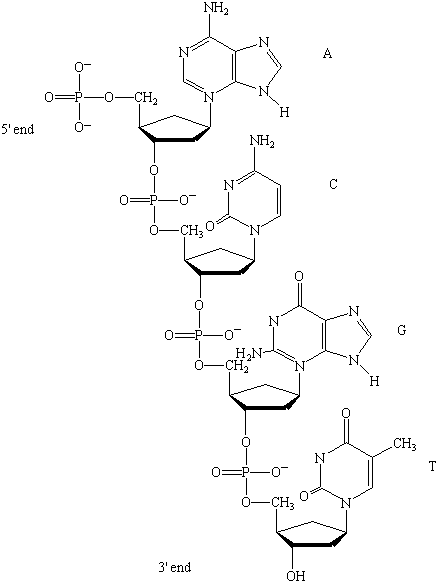 (Google)
Amino acids and proteins are another major topic in this
course. There are 20 common amino acids which make up proteins in the process
of translation. The body needs the right amino acid in order to make a specific
protein. Amino acids and proteins are one form of how genetic information is
expressed in order to perform specific tasks. For example, amino acids code for
a protein that is needed to catalyze a reaction in our cells. In this course,
greater knowledge is gained of how important every little detail is to our
cells. The understanding of what makes up a protein helps connect why a protein
might be denatured and how that denaturation causes diseases.
 (Google)
Glycolysis is the third major topic that was covered in this class. Glycolysis is the first step in the process of making ATP. It provides the cell with the energy to perform specific tasks that are needed in the body. The information in this class made it clear how efficient the body is in making and using energy.
 (Google)

